Our Work
Yolŋu-led, culturally grounded mediation and peacemaking, strengthening recognition of these processes within dominant (balanda) justice systems, and supporting Yolŋu to have greater control over justice outcomes in their communities
It is a long established fact that a reader will be distracted by the readable content of a page when looking at its layout. The point of using Lorem Ipsum is that it has a more-or-less normal distribution of letters, as opposed to using ‘Content here, content here’, making it look like readable English. Many desktop publishing packages and web page editors now use Lorem Ipsum as their default model text, and a search for ‘lorem ipsum’ will uncover many web sites still in their infancy.
We provide mediation and dispute resolution services for Yolŋu adults, young people & families across Northeast Arnhem Land and Darwin.
Our dispute resolution service is Yolŋu-led at every stage and suppports existing Yolŋu dispute resolution practices. We work within Yolŋu structures of gurruṯu (kinship) and Rom (law) so that Yolŋu families and communities have greater control over peacemaking processes and justice outcomes.
We do work in all these areas:
Mediation
Family conferencing (Family Dispute Resolution)
Restorative conferencing
Peacemaking
Process & systems advocacy
Djamarrkuḻiw’ romgu guŋga’yunawuy means ‘how to help all kids through both laws’. Through our Youth Justice Support work we help young people in trouble with the law.
We support young people and their families in ways like:
Law and Justice Groups (LJGs) exist in different communities across the NT. They are groups of Aboriginal leaders who participate in Balanda justice processes like Community Court.
ARDS auspices the Ramingining Binipilingmirring Djagaginin Mala (BDM) Law and Justice Group.
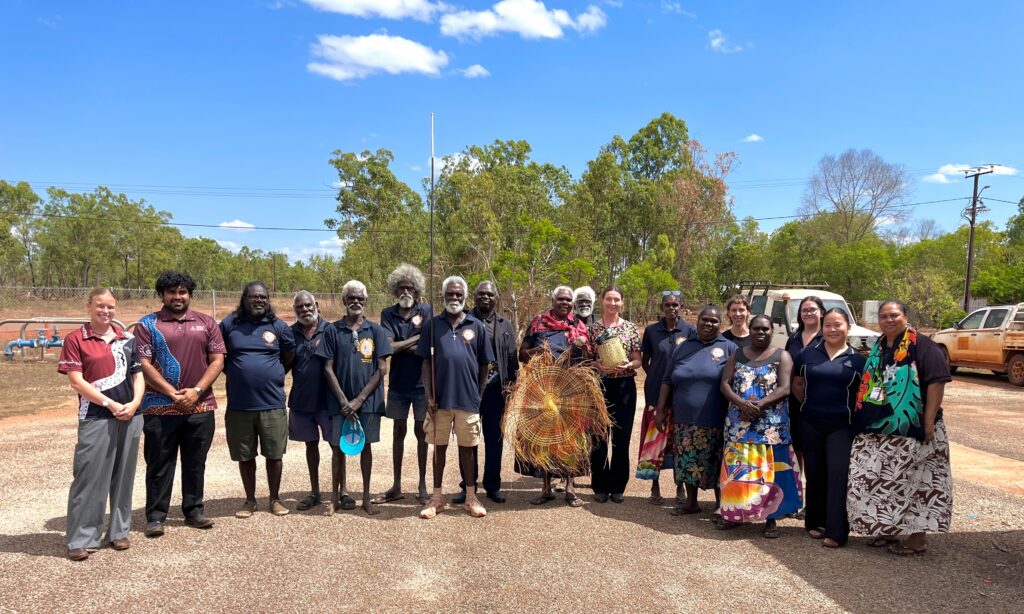
BDM is a group of Yolŋu leaders who represent clan authority in Ramingining and surrounding homelands. BDM members make decisions about law and justice-related issues, with the goal of improving justice outcomes for Yolŋu.
BDM was set up by Yolŋu nearly 20 years ago and has been a recognised source of cultural authority by Yolŋu for a long time. In July 2024, the NT Government formally recognised BDM through the Ramingining Local Decision Making Agreement (LDM) and provided funding for BDM to take part in the new Ramingining Community Court.
Today, BDM works across two areas:
(1) Ensuring Yolngu voices are heard in the Balanda court process
a) BDM participates in Community Court. Community Court is a sentencing option available for Aboriginal offenders within the NT Local Court. Four BDM members have been appointed as the “Law and Justice Group” to sit alongside the Judge during sentencing, providing recommendations to the Judge to embed Yolŋu knowledge, experience and expertise into the sentence.
b) Separate to Community Court, BDM is also involved in Local and Supreme Court matters, preparing letters for the court that provide cultural information and community views on bail and sentencing. These letters inform bail and sentencing decisions so that they are more appropriate and reflective of Yolngu aspirations.
(2) Prevention and early intervention outside of the court system – taking proactive steps like peacemaking (Mägaya Rom) and mediation to support community safety and stability.
For more information about BDM’s work, see the BDM Evaluation: April 2025-April 2026.
For some photos of BDM’s work, see the BDM year in review 2025
Read the full Ramingining Local Decision Making Agreement here.
This agreement is special because it is the first time (possibly Australia-wide) that a government has signed an agreement directly with Aboriginal leaders in their role as traditional clan leaders. Usually, governments sign agreements with organisations such as Aboriginal corporations. In Ramingining, the agreement was signed directly by Yolŋu leaders, not a corporation. This is a milestone in terms of government recognising not only Yolŋu authority but First Nations governance more broadly.